What Frequent Flyers Look For in a Travel Pillow
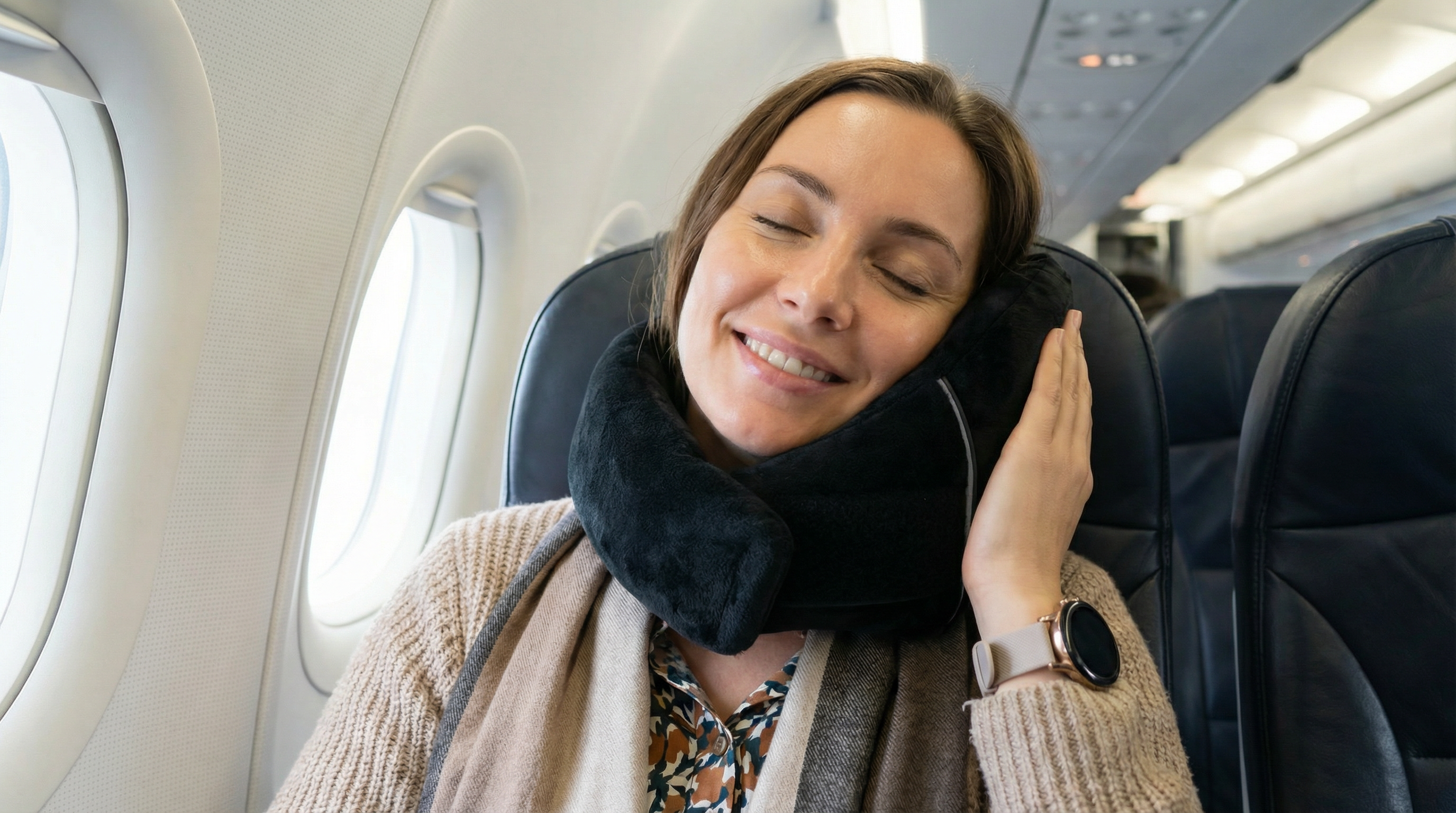
If you fly often, look for a travel pillow that supports your head where it actually drops, adjusts to fit your neck, packs easily and can be cleaned between trips. Over many flights, those four things tend to matter more than how soft a pillow feels in the store.
Does it support the spot where your head actually drops?
This is the first test, and the most important one. As you fall asleep, your muscles relax, so when you doze off sitting up, your head falls forward, to the side, or both. A pillow helps most when it is firm and tall enough in the direction you fall.
Think about how you wake up on flights. If you wake with your chin on your chest, you need support in front. If you wake leaning into the window or toward your neighbor, you need solid side support. If you do both, look for support all the way around.
If you use a U-shaped pillow and your head drops forward, a Cleveland Clinic pain specialist suggests turning it so the opening sits at the back, which gives your head more support when you lean forward. That matters, because Cleveland Clinic also notes that tilting your head forward increases the weight it places on your spine.
Can you adjust it to fit your neck?
Necks vary, and so do collars, scarves and hoods. A pillow that sits loose lets your head slide off it, while one that presses on your throat is hard to sleep in. An adjustable closure or strap lets you change the fit with your outfit and your seat.
Test the fit before a trip. Sit in a chair at home, fasten the pillow, and check three things: you can turn your head, you can swallow comfortably, and your head meets support when you let it drop. The Nodless Travel Pillow is one example of this approach, with 360-degree chin and neck support and an adjustable velcro closure designed to fit a wide range of neck sizes.
Will it pack easily enough to bring on every trip?
The best pillow is the one you actually bring. If it is bulky or awkward, it will stay home on the trips where you need it most. Look for a pillow that is light, holds its shape after being squeezed into a bag, and can clip or strap to the outside of your carry-on.
As of September 2026, the TSA lists pillows as allowed in both carry-on and checked bags, though the final decision rests with the officer at the checkpoint. Carry-on allowances are set by each airline, so check how yours treats a pillow before you fly.
Can you keep it clean between trips?
A travel pillow spends hours against your neck and face, then rides through airports and overhead bins. Cleveland Clinic notes that bedding collects dust mites, bacteria and plenty of your own dead skin cells, and that those skin cells act as a breeding ground for bacteria. A pillow you cannot clean is a pillow you will stop wanting to use.
Check the care label before you buy. Consumer Reports notes that many pillows can go in the washing machine but not all, and that solid foam pillows should skip the washer and be spot-cleaned instead. A removable cover you can wash, or a surface you can wipe, makes regular cleaning realistic. Whatever the type, let it dry completely, since a damp pillow risks mildew.
What other details should frequent flyers check?
- Fabric feel. It will be against your skin for hours, so pick a fabric you like touching.
- Warmth. Plush fabrics feel cozy on a cold plane but can feel warm in a stuffy cabin.
- Closure quality. A strap or fastener you will open and close many times should feel sturdy.
- A storage bag. A simple bag keeps it off floors and out of seat pockets between uses.
- Your sleep style. Match the shape to how you sleep, and use our guide to choosing a pillow for your sleep style to narrow it down.
If you are still deciding between fills, our memory foam, microbead and adjustable pillow showdown covers the main options. Whatever you choose, test it at home before your next flight.
Frequently asked questions
What is the most important feature in a travel pillow?
Support in the direction your head actually drops. Your muscles relax as you fall asleep, so your head falls forward, sideways or both when you doze upright. If your chin drops, look for chin support, and if you lean sideways, look for firm sides. Fit, packability and easy cleaning come next, because a pillow only helps if it fits and you bring it.
Can I bring a travel pillow through airport security?
Yes. As of September 2026, the TSA lists pillows as allowed in both carry-on and checked bags, though the final decision rests with the officer at the checkpoint. Carry-on allowances are set by each airline, so check how yours treats a pillow. Clipping it to the outside of your bag can save space inside.
How often should I wash a travel pillow?
Wash or wipe the cover after each trip, since Consumer Reports suggests laundering pillow covers about once a week when they are in regular use. Clean the pillow itself every few months, as Cleveland Clinic advises for pillows, or at least twice a year if the label allows washing. Always let it dry completely before packing it.
How do I know if a travel pillow fits me?
Try it seated before you travel. Fasten it and check that you can turn your head and swallow comfortably, and that nothing presses on your throat. Then let your head drop forward and to each side. If your head meets support in each direction, the fit is right, and if it slides off, tighten the closure or try another shape.
Sources
- NINDS: Brain Basics: Understanding Sleep
- Cleveland Clinic Newsroom: Tips for Traveling with Back Pain
- Cleveland Clinic: Poor Posture Hurts Your Health More Than You Realize
- TSA: Pillows
- FAA: Carry-On Baggage Tips
- Consumer Reports: How to Wash Your Pillow
- Cleveland Clinic: How Often You Should Wash Your Sheets