Travel Pillow Hygiene: How to Keep Yours Clean
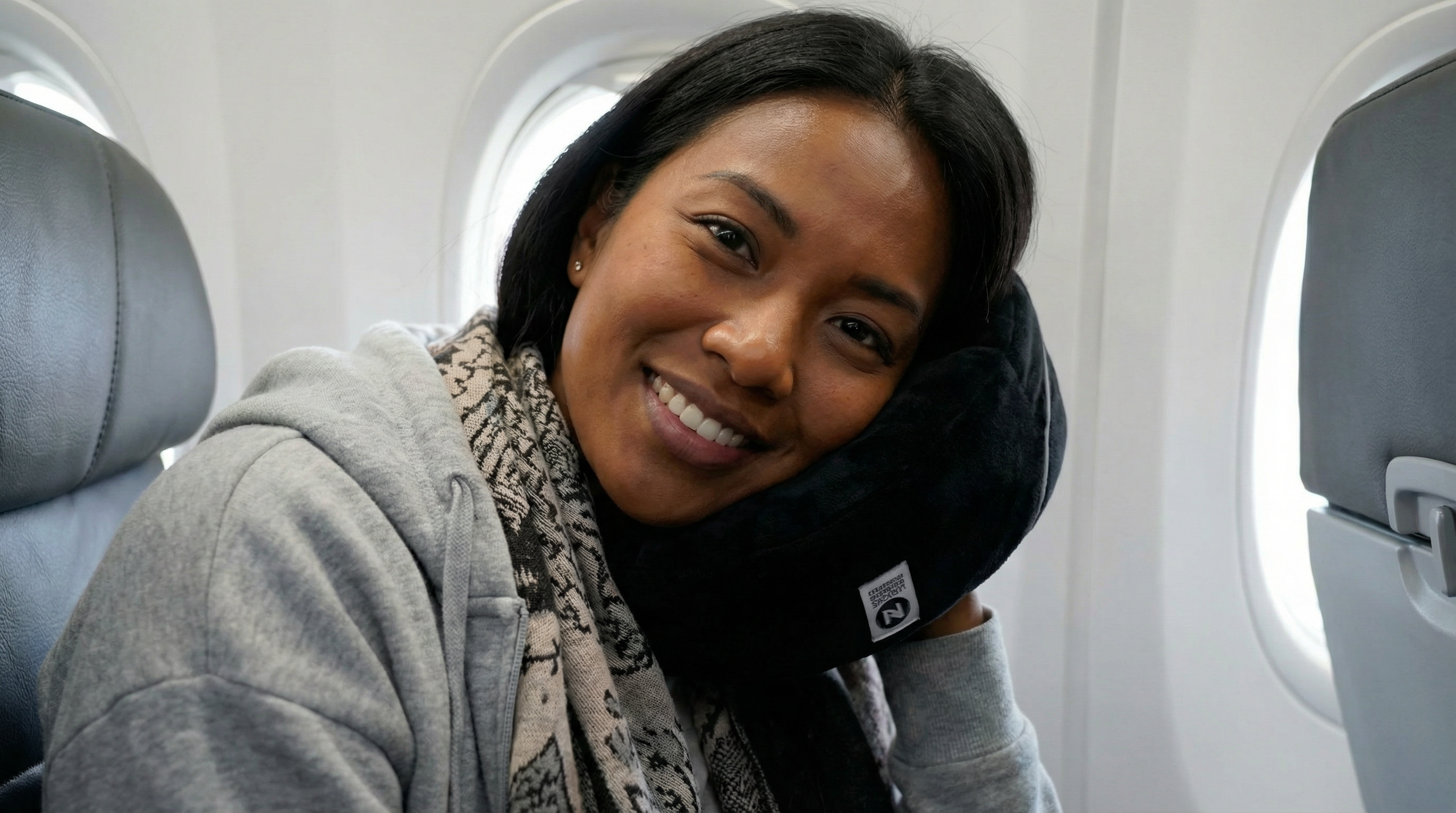
To keep a travel pillow clean, store it in a bag, keep it off floors and out of seat pockets, and clean its cover or surface after each trip. Wash or spot-clean the pillow itself every few months, following its care label, and let it dry completely before you pack it, to avoid mildew.
Why do travel pillows get dirty so fast?
A travel pillow spends hours pressed against your neck, jaw and hair. Cleveland Clinic notes that bedding collects dust mites, bacteria and plenty of your own dead skin cells, and that those skin cells act as a breeding ground for bacteria. Cleveland Clinic adds that exposure to the organisms in dirty bedding can cause problems like rashes and eczema.
Then there is the journey itself. Between uses, a travel pillow rides on airport floors, in overhead bins and in seat-back pockets, and it gets handled by hands that have touched everything else. Few pieces of bedding go as many places as yours does.
How often should you clean a travel pillow?
Treat the cover like a pillowcase and the pillow like a pillow. Consumer Reports suggests laundering pillow covers and pillowcases about once a week, along with your sheets, and washing a washable pillow at least twice a year, or four times a year if you can. Cleveland Clinic suggests cleaning pillows at least every few months.
- After every trip: wash the cover if it comes off, or wipe down the surface.
- Every few months: clean the pillow itself, following the label.
- Right away: after a spill, heavy sweating, an illness, or a hotel stay with signs of bed bugs.
How do you clean different types of travel pillows?
Start with the care label every time. Consumer Reports notes that many pillows can be machine-washed, but not all. Soft fabrics need care too: the Nodless Travel Pillow, for example, is wrapped in ultra-soft velvet fabric, so check any care instructions that came with it before you clean it. If you are not sure what is inside your pillow, our comparison of memory foam, microbead and adjustable pillows explains the main types.
Memory foam
Solid foam does not belong in the washing machine. Consumer Reports explains that washer agitation can break up slab-style foam pillows, and suggests vacuuming the surface, spot-cleaning with a damp cloth and a small amount of mild detergent, and laying the pillow flat to air-dry. Some shredded foam pillows are machine-washable, so check the label.
Polyester fiberfill
If the label allows machine washing, Consumer Reports suggests warm water on the gentle cycle for polyester pillows. Dry the pillow thoroughly before you use or pack it.
Inflatable pillows
Wipe the surface with a cloth, mild soap and water, then let it dry fully while it is still inflated. Deflate and pack it only once every seam and the valve are dry.
Removable covers
Wash a removable cover according to its own label, and let it dry completely before you put it back on. Having a spare cover lets you swap in a clean one while the other dries.
Why does drying matter so much?
A pillow that goes back in its bag damp invites mildew. Consumer Reports calls getting a pillow completely dry crucial, because otherwise you risk mildew. The EPA puts it more broadly: the key to mold control is moisture control, and wet items should be dried within 24 to 48 hours to prevent mold growth.
Plan cleaning around your trips. Wash or spot-clean at home, not the night before a flight, so the pillow has a full day or more to air-dry. Never seal a damp pillow inside a zipped bag or packing cube.
What hygiene habits help on the road?
- Give it a home. Store the pillow in a bag or case between uses, not loose in your luggage.
- Keep it off the floor. Clip it to your bag or hold it on your lap, not under the seat or in the seat-back pocket.
- Do not share it. A pillow that touches your face should stay yours.
- Keep your bags off hotel beds and floors. The EPA advises using the luggage rack, keeping luggage away from the bed, and checking the mattress and headboard before sleeping.
- Unpack into the laundry. After a trip, the EPA suggests unpacking straight into the washing machine. It notes that time in a hot dryer kills bed bugs while washing alone generally does not, so use high heat only if the label allows it.
If a pillow still smells after cleaning, stays lumpy, or has torn fabric or a failing closure, it is time to replace it. For a look at how your own pillow compares with the ones hotels provide, see hotel pillows vs your own travel pillow.
Frequently asked questions
Can you put a travel pillow in the washing machine?
Only if the care label says so. Consumer Reports notes that many pillows can be machine-washed, but not all. Solid memory foam should skip the washer, since agitation can break it up, so vacuum and spot-clean it with a damp cloth and a little mild detergent instead. For a removable cover, follow the cover's own label.
How often should you wash a travel pillow cover?
Consumer Reports suggests laundering pillow covers and pillowcases about once a week, along with your sheets. A travel pillow is not used every night, so a practical rhythm is to wash or wipe the cover after each trip, and more often on long trips where you use it daily. Clean the pillow itself every few months.
How do you dry a memory foam travel pillow?
Lay it flat to air-dry, as Consumer Reports suggests, somewhere with good airflow and out of direct heat. Give it time: the EPA advises drying wet items within 24 to 48 hours to prevent mold growth, so start early and turn the pillow now and then. Do not pack it until it feels completely dry all the way through.
How do you protect a travel pillow from bed bugs?
Keep it in a closed bag when you are not using it, and follow the EPA's travel tips: check the mattress and headboard before sleeping, and keep luggage on the rack, away from the bed. When you get home, unpack straight into the washing machine. The EPA notes that a hot dryer kills bed bugs, so use high heat only if the label allows it.