The Connection Between Posture and Travel Fatigue
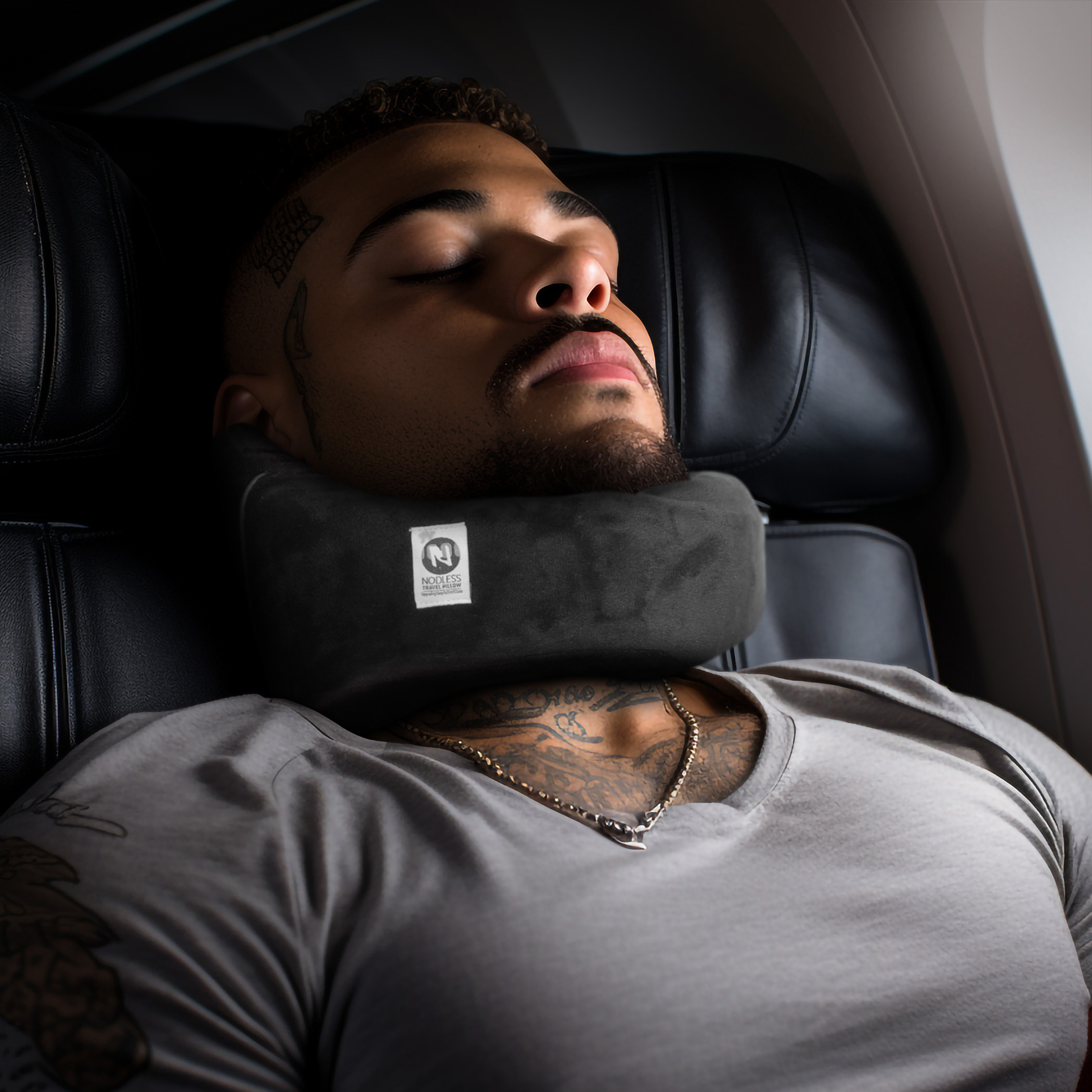
Posture and travel fatigue are linked because sitting still makes your muscles hold one position for hours, which reduces their blood supply and tires them. A dropped head adds strain to your neck. Supporting your lower back and head, and getting up every hour or two, can help you arrive less stiff and less tired.
Why does sitting still make you tired?
Sitting looks restful, but your muscles are working the whole time. The Canadian Centre for Occupational Health and Safety (CCOHS) explains that sitting requires the muscles to hold the trunk, neck and shoulders in a fixed position. A fixed position squeezes the blood vessels in those muscles and reduces their blood supply, and a reduced blood supply speeds up fatigue.
CCOHS notes that this explains why people who sit all day doing little physical work often feel tired by the end of it. A long travel day works the same way. You can barely move for eight hours and still feel worn out when you land.
Stiffness follows the same pattern. CCOHS names the neck and lower back as the areas usually most affected, and it warns that prolonged sitting makes muscles more likely to pull, cramp or strain when they are stretched suddenly. That is a good reason to stand and move gently before you reach for a heavy bag.
What happens when your head drops?
As you fall asleep, your muscles relax. When you doze off sitting up, the muscles that hold your head upright ease off, and your head tips forward, to the side, or both. Your neck then spends the nap held at an angle.
That angle has a cost. Cleveland Clinic explains that tilting your head forward increases the weight it places on your spine, and that poor posture forces the muscles in your neck and back to overwork. Add that to the fatigue of sitting still, and it is easy to see why a long trip can leave your neck stiff.
The fix is to support your head so your muscles do not have to hold it. If you use a U-shaped pillow, a Cleveland Clinic pain specialist suggests turning the opening to the back, so your head has more support if you lean forward. A pillow built with chin support does that job by design: the Nodless Travel Pillow, for example, is shaped to give 360-degree chin and neck support and is designed to stop your head from nodding forward.
How should you set up your seat?
Start with your lower back. The same Cleveland Clinic specialist notes that most of the time there is not enough lumbar support to sit with proper posture for a long stretch, and suggests a pillow or rolled towel behind your back to keep your spine's natural S-shaped curve. Then work through the rest of the seat.
- Lower back: a small pillow, a rolled sweater or a folded jacket in the curve of your lower back.
- Hips: sit all the way back, so the seat back can support you.
- Feet: keep them flat, and move your bag if it pushes your knees up.
- Head: use a pillow that supports the direction your head actually drops.
- Driving: set the seat before you leave, and add the same lower back support.
Once you are set up, do not stay frozen. CCOHS describes a good sitting position as one that lets you change your body position frequently and naturally, so shift your weight and adjust as the hours pass.
Why do movement breaks matter so much?
Movement is the simplest counter to sitting still. CCOHS suggests five minutes of moderate to vigorous activity, such as walking, for every 40 to 50 minutes of sitting at work. Cleveland Clinic suggests a short walk about once an hour if you can, and its pain specialist recommends an aisle seat on flights because it makes getting up to stretch much easier.
There is a circulation reason too. The CDC says anyone traveling more than four hours, by air, car, bus or train, can be at risk for blood clots, because clots can form in the deep veins of the legs when you sit still in a confined space for a long time. It advises moving your legs often and exercising your calf muscles. The National Heart, Lung, and Blood Institute also suggests standing up and walking around every one to two hours, if possible.
When you cannot get up, move in your seat. The CDC suggests straightening your legs and flexing your ankles by pulling your toes toward you. If you have risk factors for blood clots, talk with your doctor before a long trip. For a fuller routine, see these stretching exercises for airplane passengers.
A simple posture plan for your next trip
- Before you sit: set your lower back support and adjust the seat.
- While you are awake: sit back, keep your feet flat and change position often.
- Before you sleep: put on a pillow that supports your chin and neck.
- Every hour or two: stand, walk or at least move your legs.
- After you arrive: walk for a few minutes before you lift heavy bags.
If your neck still aches after a trip, our guide to beating neck pain after long flights has more ideas. Small changes to your seat, your head support and your breaks add up over a long travel day.
Frequently asked questions
Why do I feel so tired after sitting on a plane all day?
Sitting still keeps your muscles holding one position, which squeezes their blood vessels and reduces their blood supply. According to CCOHS, that reduced supply speeds up fatigue, which is why long sitting can tire you even when you barely move. A dropped head during naps adds work for your neck muscles, and broken sleep on a flight adds its own tiredness.
How often should I get up on a long trip?
The CDC suggests moving your legs often on long trips, and the National Heart, Lung, and Blood Institute suggests walking around every one to two hours if possible. Cleveland Clinic suggests a short walk about once an hour if you can. On a plane, an aisle seat makes this easier. In a car, plan stops so you can stand, walk and stretch for a few minutes before you drive on.
What can I use for lower back support on a plane?
You do not need special gear. A Cleveland Clinic pain specialist suggests a pillow or rolled towel behind your back to keep your spine's natural S-shaped curve. On a plane, a rolled sweater, a folded jacket or a small cushion can do the same job. Place it in the curve of your lower back, then sit all the way back against it.
Does a neck pillow help with posture?
A neck pillow helps by supporting your head so your neck muscles do not have to hold it while you sleep. Choose one that supports the direction your head drops. If your chin falls forward, look for chin support, or turn a U-shaped pillow so the opening faces the back, as a Cleveland Clinic specialist suggests. Fasten it snug but comfortable.
Sources
- CCOHS: Working in a Sitting Position: Overview
- Cleveland Clinic: Poor Posture Hurts Your Health More Than You Realize
- Cleveland Clinic Newsroom: Tips for Traveling with Back Pain
- CDC: Understanding Your Risk for Blood Clots with Travel
- NHLBI: Preventing Blood Clots
- NINDS: Brain Basics: Understanding Sleep