How to Build a Minimalist Travel Sleep Kit
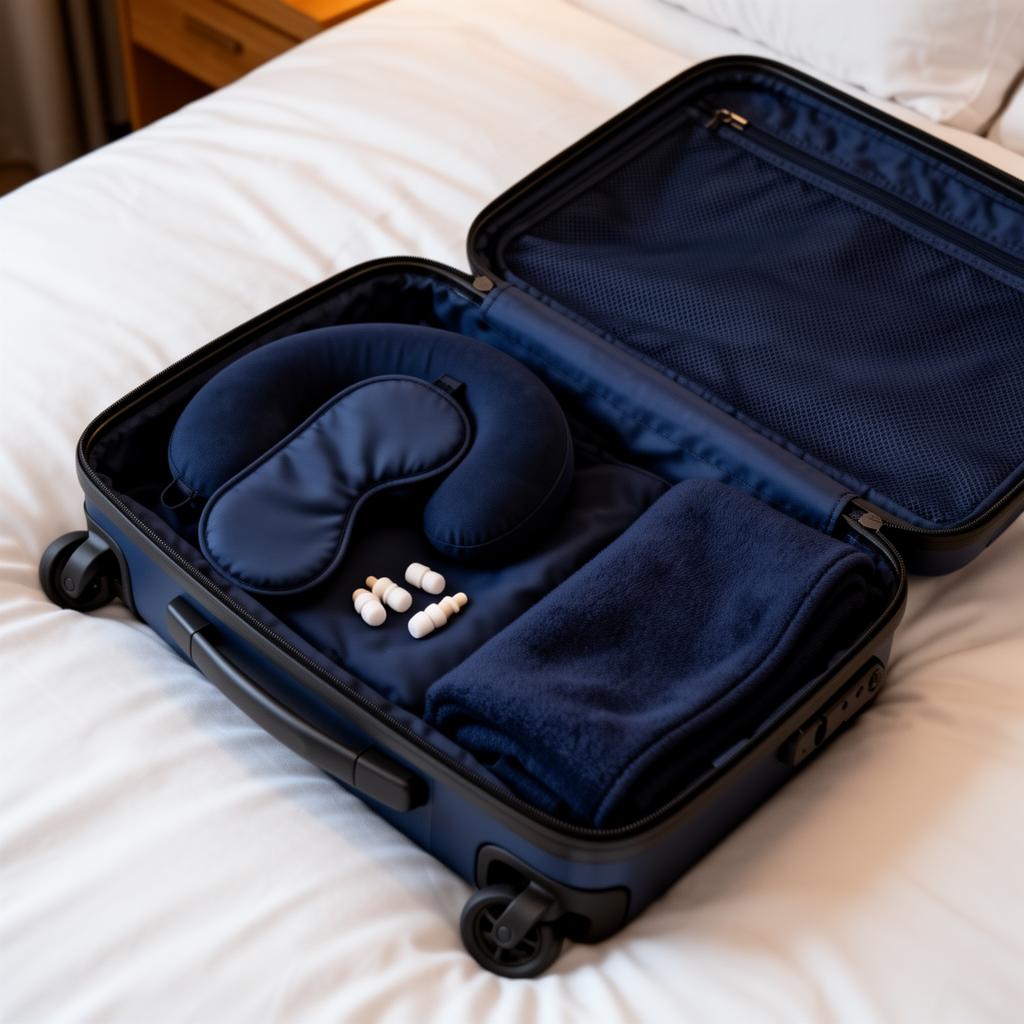
A minimalist travel sleep kit covers the four things that can break sleep on the road: light, noise, head support and temperature. Six items do the job: an eye mask, earplugs, a travel pillow, a warm layer, an empty water bottle and a small toiletry pouch. Pack them together, at the top of the bag you keep with you.
What makes an item earn its space?
Start from the conditions sleep needs. NIOSH, the CDC's workplace safety institute, describes a good sleep environment as very dark, quiet, cool and comfortable. On a plane, a train or in an unfamiliar hotel room you control little of that, so your kit's job is to recreate those conditions wherever you are.
That gives you a simple rule. An item earns a place only if it solves a problem you have on most trips, weighs little, and works in more than one setting. Anything that fails the rule stays home, however nice it looks in a packing video.
The six-item kit
1. An eye mask
Light is hard to control in transit, from cabin lights to the standby glow in a hotel room. NIOSH suggests an eye mask when it is hard to avoid light from traffic or streetlamps, and the same logic applies to reading lights and window shades. Pick one that blocks light at the nose without pressing on your eyes. Our look at whether sleep masks help you fall asleep faster covers the question in more depth.
2. Earplugs
NIOSH also recommends soft earplugs when your sleep environment is noisy, which is often the case in transit. Foam earplugs are small and light, so pack a spare pair in case one goes missing in a seat.
3. A travel pillow
A pillow earns its space whenever you sleep sitting up. Choose one that supports the direction your head drops and packs without fuss. The Nodless Travel Pillow suits a minimal kit: it is lightweight and easy to pack, and it gives 360-degree chin and neck support with an adjustable closure.
4. A warm layer
NIOSH recommends a comfortably cool room, about 65 to 68 degrees Fahrenheit for most people, with covers. In transit you rarely control the temperature, so a light sweater, wrap or scarf that doubles as a blanket lets you adjust. Rolled up, it can also serve as support for your lower back.
5. An empty water bottle
As of September 2026, the TSA allows empty water bottles in carry-on bags, with the final decision resting with the officer at the checkpoint. Bring it through security empty and fill it on the other side. With water at hand, you are not waiting on the drink cart at 2 a.m.
6. A small toiletry pouch
A toothbrush, travel-size toothpaste and lip balm bring a bit of your nightly routine with you. NIOSH suggests following a relaxing routine before bed to help your body make the transition from awake to asleep. A few familiar steps in a train restroom or hotel bathroom are a small version of that routine.
Optional: warm socks
If your feet run cold, a pair of soft socks is the one extra worth adding as a seventh item. They weigh almost nothing and fit in any corner of the pouch.
What should you leave out?
Minimalism is mostly about what you do not pack. Skip full-size bedding, a second pillow, and any gadget you did not use on your last three trips. Leave full-size liquids behind as well, since toiletries in containers over 3.4 ounces will not pass the carry-on liquids rule.
Watch for doubles, too. If a scarf can be your blanket, you do not need both, and if your earbuds play white noise, you may not need a second sound device.
How should you pack the kit?
Keep everything in one zip pouch at the top of the bag you keep at your seat. When the lights go down, you want to reach the mask and earplugs without standing up or unpacking. Store the pouch in the same pocket on every trip, so you can find it in the dark.
Liquids need their own spot. As of September 2026, the TSA liquids rule allows a quart-sized bag of liquids, gels, creams and pastes in travel-size containers of 3.4 ounces (100 milliliters) or less per item. Keep that bag easy to pull out for screening, and move it back into the pouch once you are through.
Your pillow can ride clipped to the outside of your bag or packed on top, since the TSA lists pillows as allowed in carry-on bags. When you get home, restock earplugs and toothpaste right away, so the kit is ready for the next trip. For a longer checklist, see our carry-on packing list for better sleep.
Frequently asked questions
What is the most important item in a travel sleep kit?
It depends on what usually keeps you awake. If light bothers you, the eye mask matters most, and if noise wakes you, start with earplugs. If you sleep sitting up and your head drops, the pillow comes first. NIOSH describes good sleep conditions as dark, quiet, cool and comfortable, so build the kit around whichever of those you usually lack.
Can I bring a water bottle through airport security?
Yes, if it is empty. As of September 2026, the TSA allows empty water bottles in carry-on and checked bags, and the final decision rests with the officer at the checkpoint. Bring the bottle empty and fill it after screening. A bottle with water in it counts as a liquid and falls under the liquids rule instead.
Do toiletries in a sleep kit have to follow the liquids rule?
Yes, if they travel in your carry-on. As of September 2026, the TSA allows a quart-sized bag of liquids, gels, creams and pastes, in travel-size containers of 3.4 ounces (100 milliliters) or less per item. Toothpaste counts, so choose a travel-size tube. Keep the bag near the top of your kit so it is quick to take out for screening.
How do I keep a minimalist kit from growing?
Use one small pouch and let its size set the limit. After each trip, take out anything you did not use and ask whether it solved a real problem. Restock only what ran out. If a new item earns a place, something else should leave, so the kit stays light enough that you always bring it.